

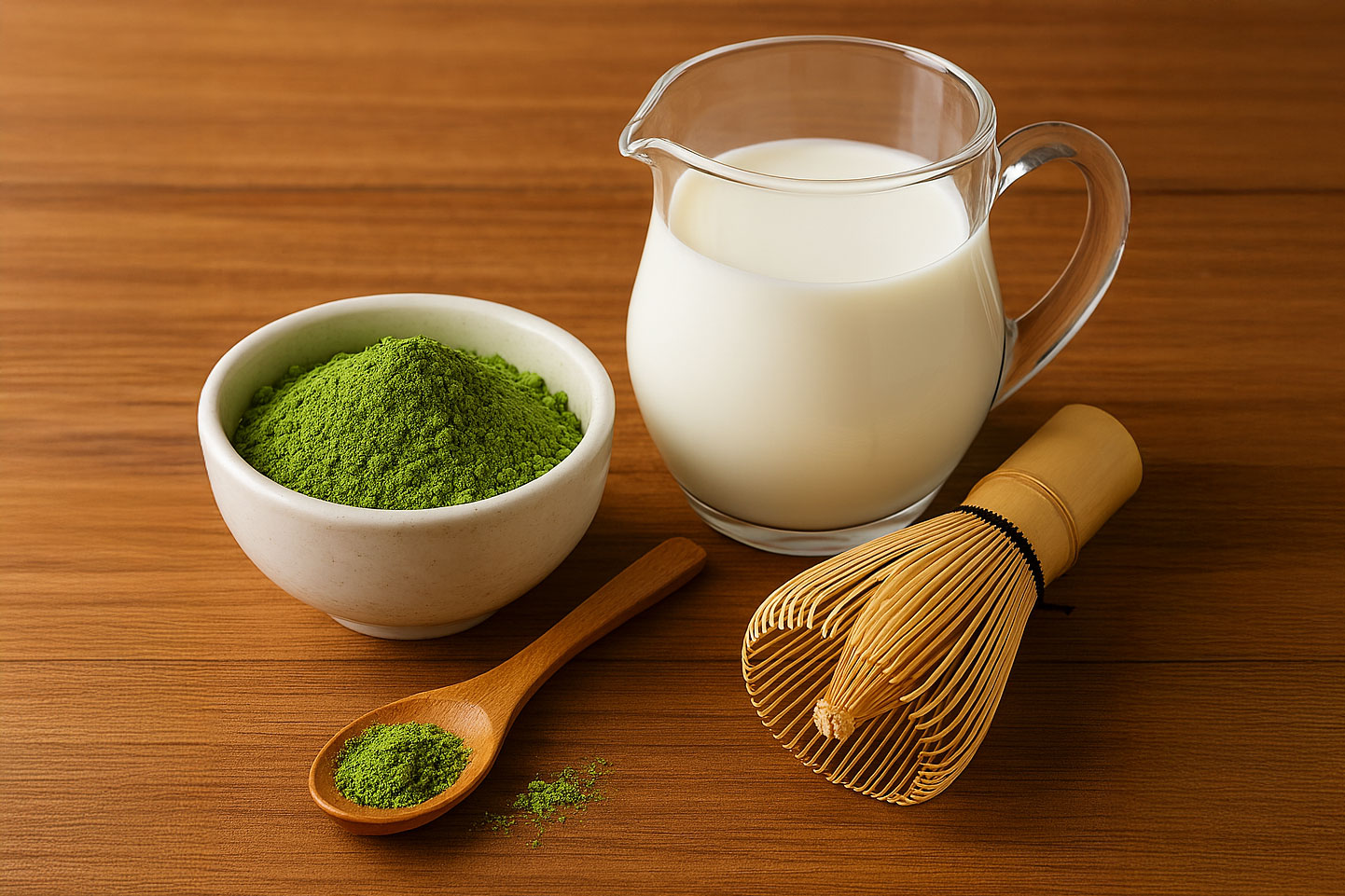
1:Ingredients for 4 servings of Matcha Latte
  |
|---|
| Matcha powder: 2 tablespoons (approx. 20g) Use high-quality matcha with vibrant color and rich aroma. |
| Milk: 600ml Whole milk or preferred alternatives like soy or oat milk. |
| Hot water: 80ml (around 80°C / 176°F) Used to dissolve the matcha powder. |
| Chasen (bamboo whisk) Used to froth and blend the matcha smoothly. |
| Tea strainer (optional) Helps sift matcha to avoid clumps. |
| Sugar or syrup (optional) To adjust sweetness to taste. |
2:Temperature, Matcha Amount, and Heart Art Tips
 |
|---|
| Item | Details |
|---|---|
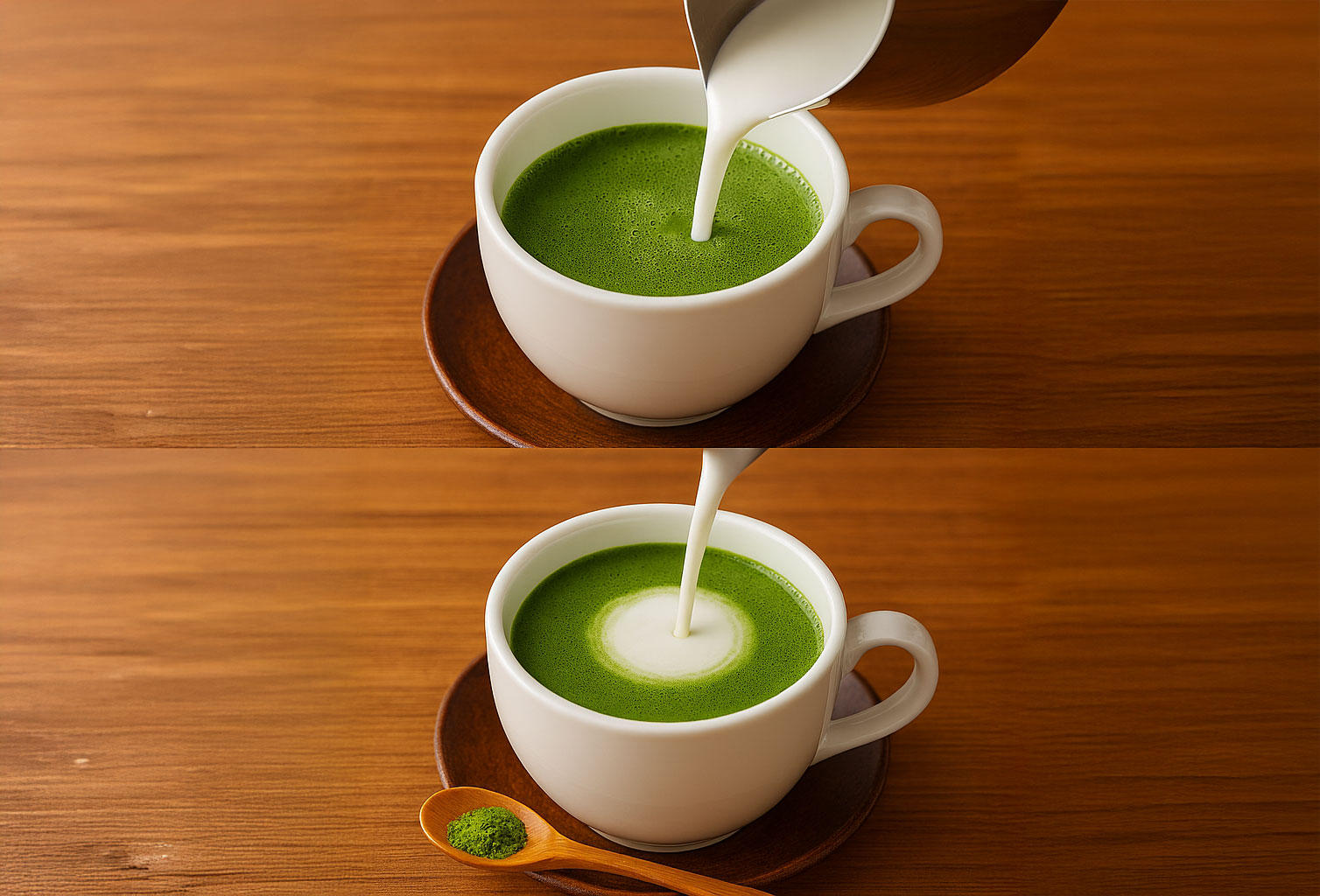
| Milk Temperature | Ideal range is 60–65°C (140–149°F). Too hot creates coarse foam; too cold makes latte art difficult. |
| Matcha Amount | About 5g (1 heaping teaspoon) per cup. Whisk with 80ml hot water until smooth and lump-free. |
| Heart Art Tips | Pour milk slowly into the center. Once a white circle forms, gently wiggle the pitcher and finish with a pull to shape the heart. Pitcher height and angle are key. |
Tips for Creating Striped Heart Latte Art
 |
|---|
◆ “Tea strainer vs. sprinkling matcha directly on milk”
Why use a tea strainer?
Purpose: to create a smooth, even layer of matcha powder
- Matcha easily forms small clumps because it absorbs moisture.
- Sifting through a tea strainer creates a fine, mist-like layer.
- The surface becomes uniform and clean, ideal for photography or café-style presentation.
- Most cafés use a strainer when finishing drinks with matcha powder.
- Best when you want:
- A smooth, even green surface
- A delicate finish over latte art
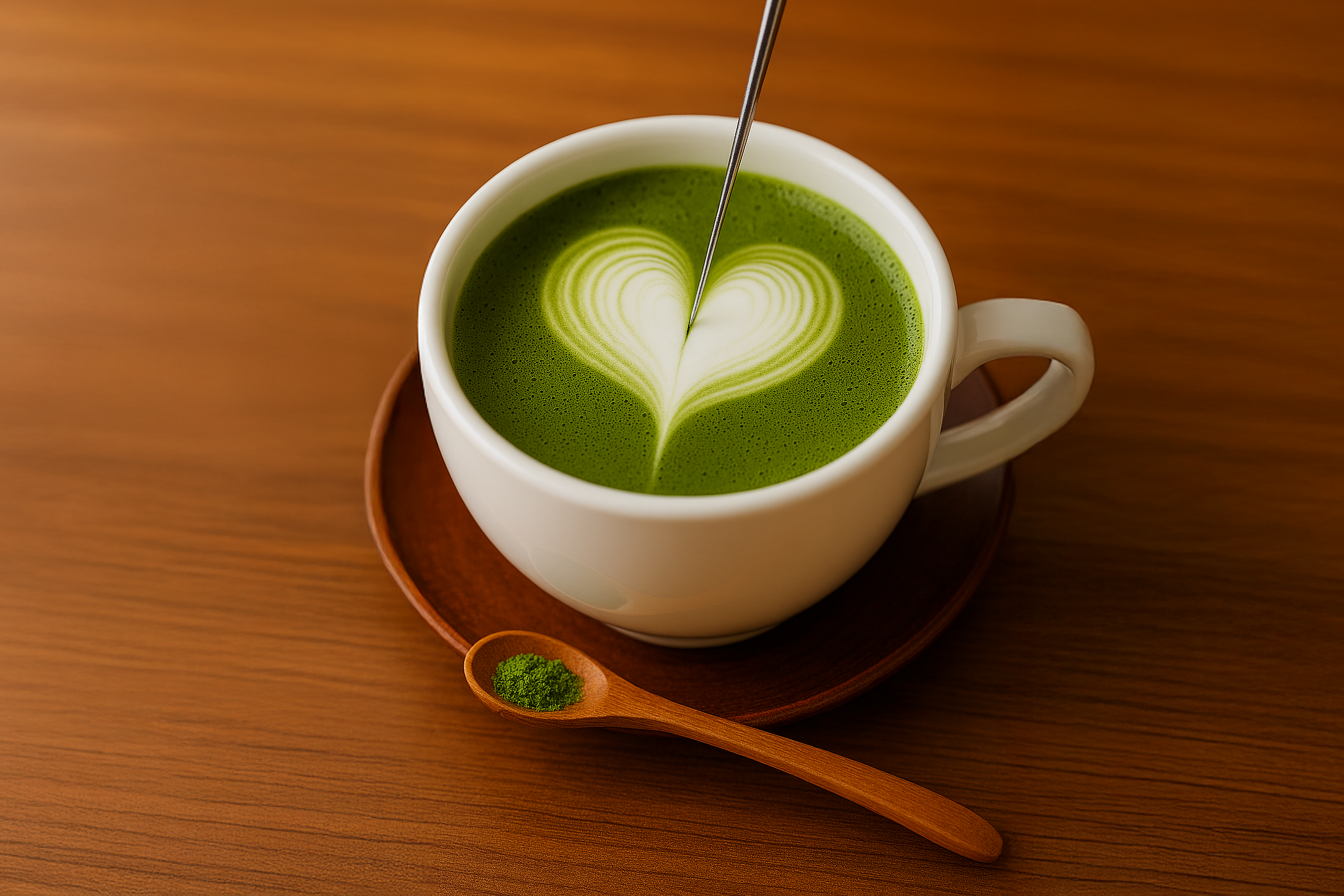
A:Create a heart using a pointed tool
1. It sharpens the border between matcha and milk Pulling inward repeatedly refines the edge and makes the pattern clearer.
2. It creates layered stripes One stroke makes a thick line, but several strokes create fine, delicate striping.
3. It adds depth to the heart Moving from the darker green edge toward the white center creates a natural gradient.
4. Matcha has strong contrast Because matcha is more vivid than espresso, multiple strokes show up beautifully.
So the rule becomes: For free-pour latte art → 1–2 strokes. For etched designs with a pointed tool → multiple strokes are ideal.
B:How to Create Striped Heart Latte Art
1. Prepare silky microfoam Coarse bubbles will blur the stripes, so aim for smooth, glossy milk.
2. Start pouring from a higher position Pour a thin stream from about 5–8 cm to create a stable base layer.
3. Lower the pitcher once a white circle forms Bring the spout close to the surface (1–2 cm).
4. Gently wiggle the pitcher left and right Keep the wiggle small and steady. This motion creates the striped pattern.
5. Finish with a clean pull through the center Lift the pitcher slightly and draw a line downward to shape the heart.
6. Use slightly stronger matcha A richer matcha base gives better contrast, making the stripes more visible.