

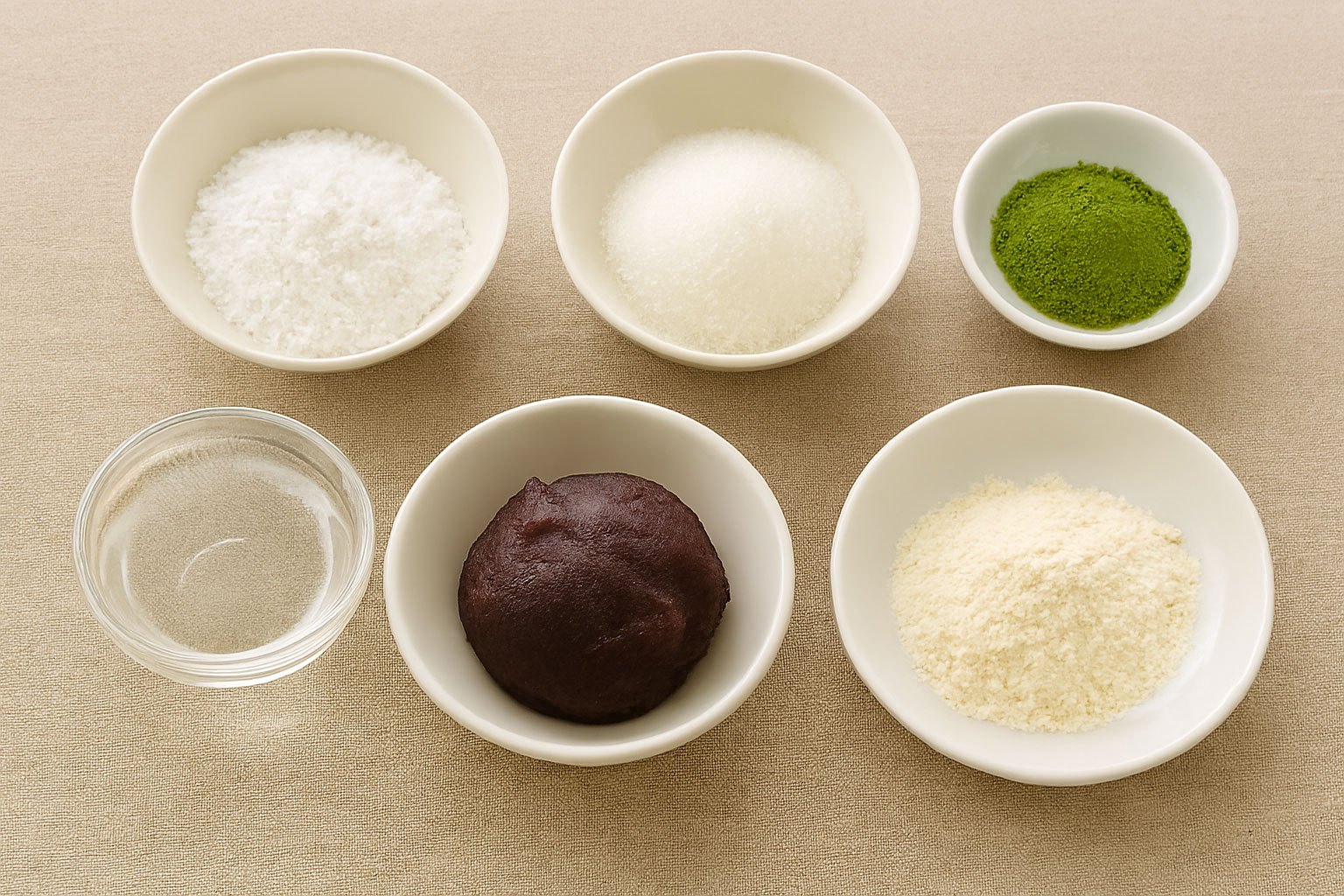
1:Ingredients for 8 Matcha Nama Yatsuhashi
  |
|---|
Ingredients for 8 Matcha Nama Yatsuhashi
| Ingredient | Amount | Notes |
|---|---|---|
| Shiratamako (glutinous rice flour) | 40g | Use 100% glutinous rice type |
| White sugar | 40g | Granulated sugar is also fine |
| Water | 80ml | Soft water preferred |
| Matcha powder | 1 tsp (approx. 2g) | Use fresh, high-quality matcha |
| Koshi-an (smooth red bean paste) | 80g (10g × 8 pieces) | Firmer paste is easier to wrap |
| Dusting powder (kinako or potato starch) | As needed | Prevents sticking during shaping |
2:Dough Preparation Tips and Precautions
 |
|---|
| Item | Details |
|---|---|
| Flour Selection | Use shiratamako made from 100% glutinous rice; fine joshinko or cake flour ensures smooth texture. |
| Matcha Handling | Store matcha in lightproof containers and use quickly after opening to preserve color and aroma. |
| Water Control | Add water gradually to avoid lumps; soft water helps achieve a tender mouthfeel. |
| Heating Process | When heating with microwave or steamer, stir halfway through to ensure even consistency. |
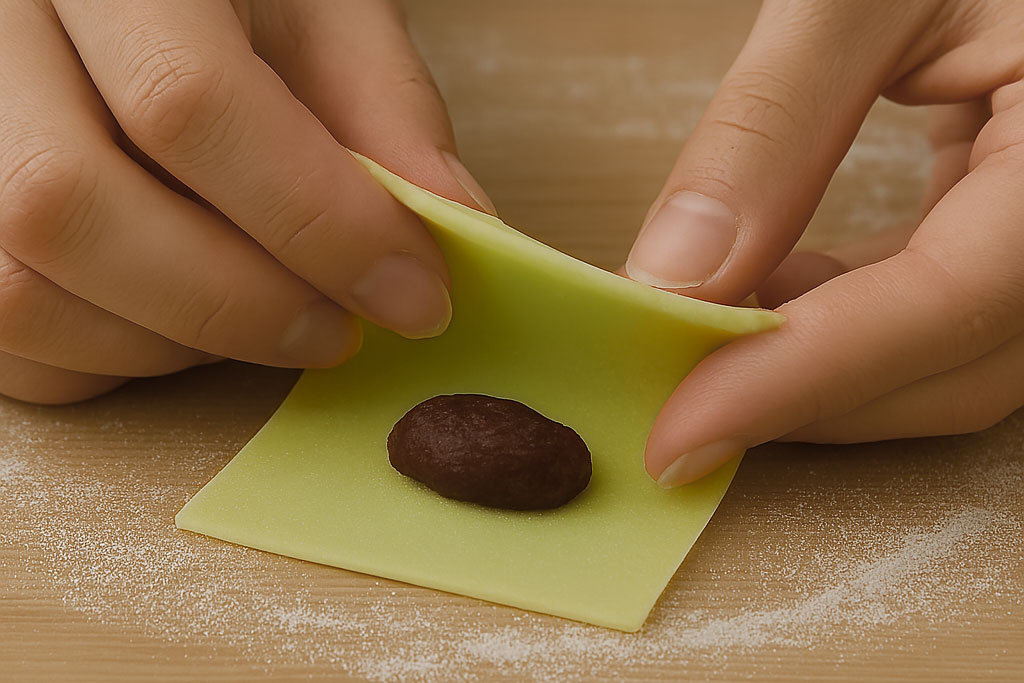
| Kneading Technique | Knead thoroughly while hot to create a smooth, elastic dough. |
| Dusting Powder | Use kinako or potato starch; avoid strong aromas that overpower matcha’s delicate flavor. |
| Dough Thickness | Roll evenly and thinly for easier wrapping and a refined appearance. |
| Temperature Management | Work quickly before the dough cools and hardens, which makes wrapping difficult. |
3:Storage and Freezing Advice
 |
|---|
| Item | Details |
|---|---|
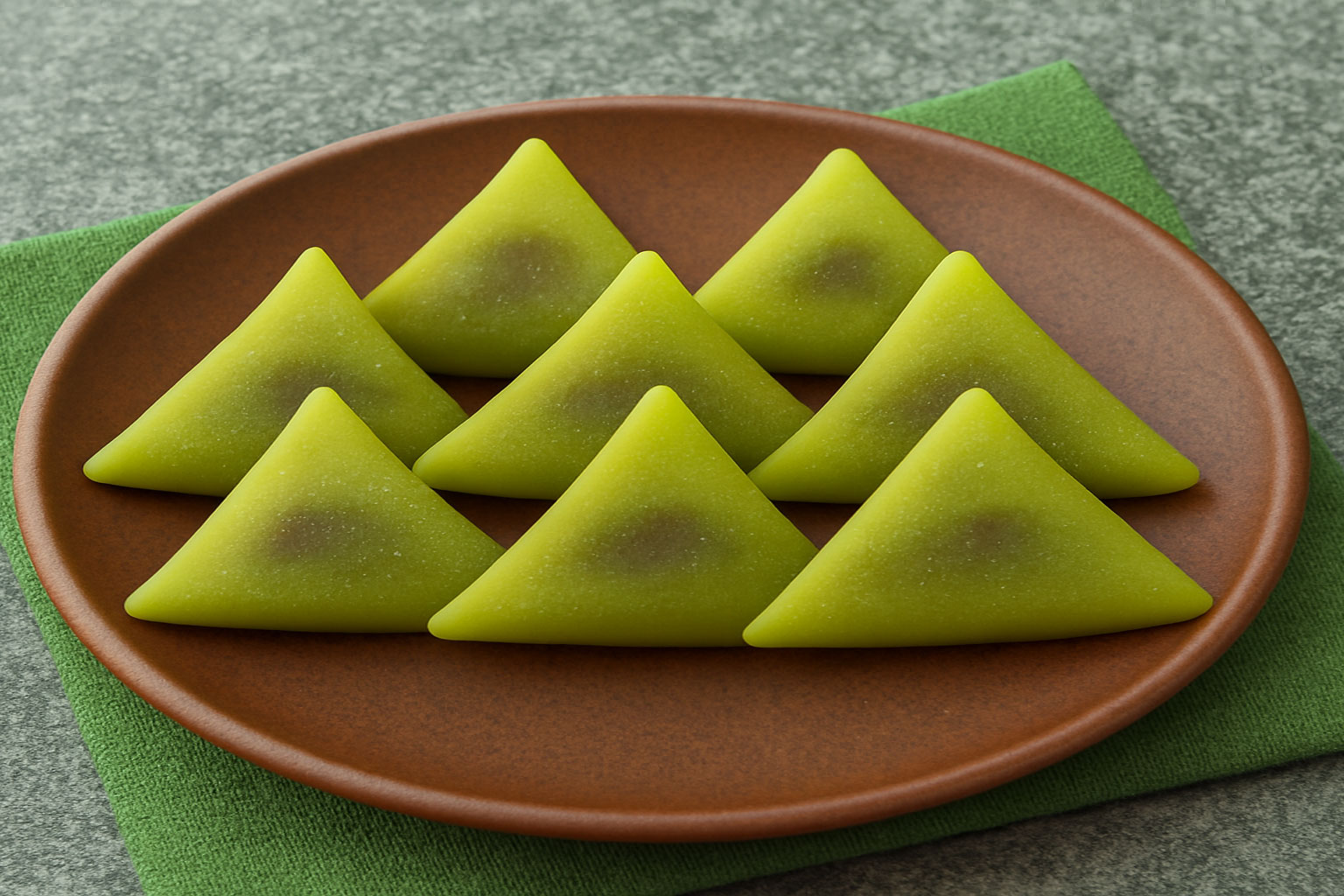
| Room Temperature | Unopened yatsuhashi should be stored in a cool, dry place away from sunlight and humidity. |
| Refrigeration | Not recommended. The mochi skin hardens and loses its soft texture. |
| Freezing | After opening, wrap each piece and seal in an airtight bag. Can be frozen for 2–3 weeks. |
| Thawing | Let thaw naturally at room temperature for 30–60 minutes. Avoid using a microwave. |
| Shelf Life After Opening | Best consumed within 3 days at room temperature. In summer, ideally on the same day. |
| Notes | Frozen yatsuhashi may lose some flavor and texture, so not ideal for gifting, but fine for personal use. |